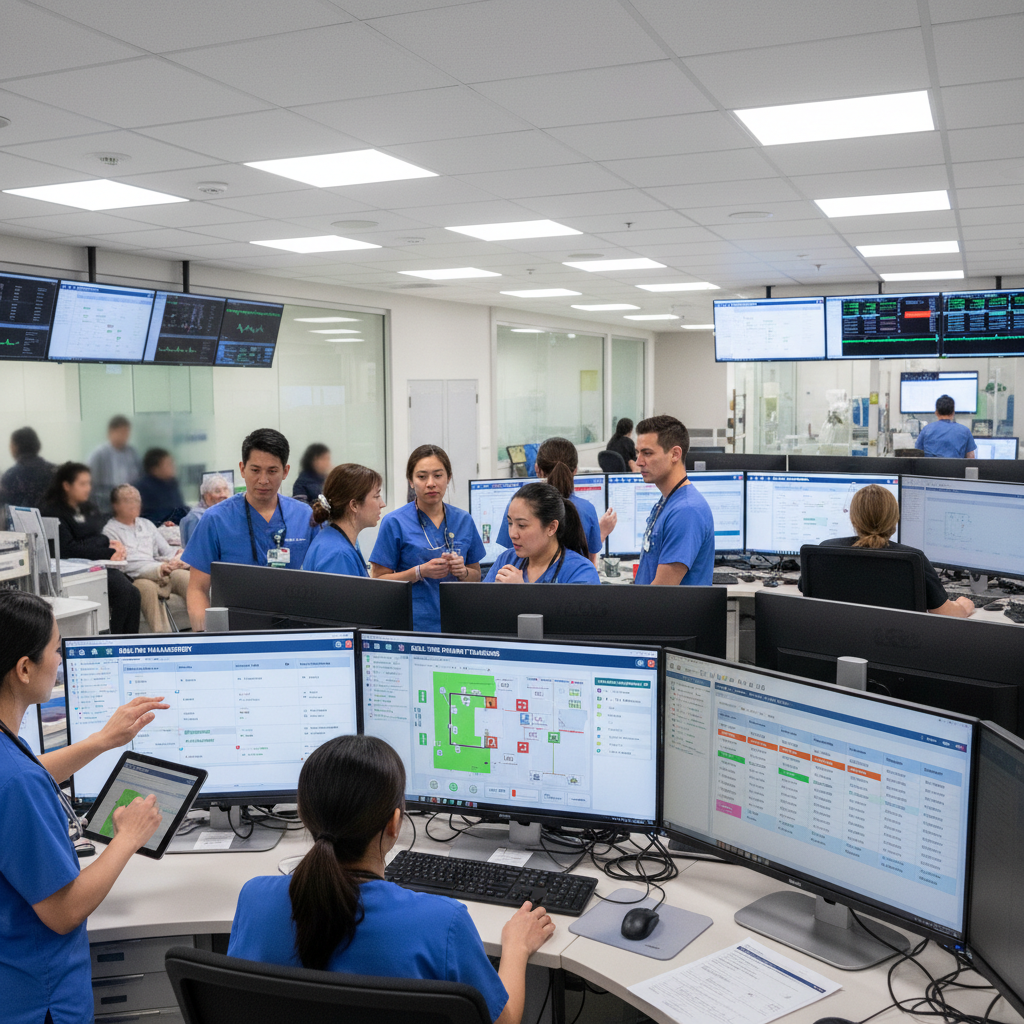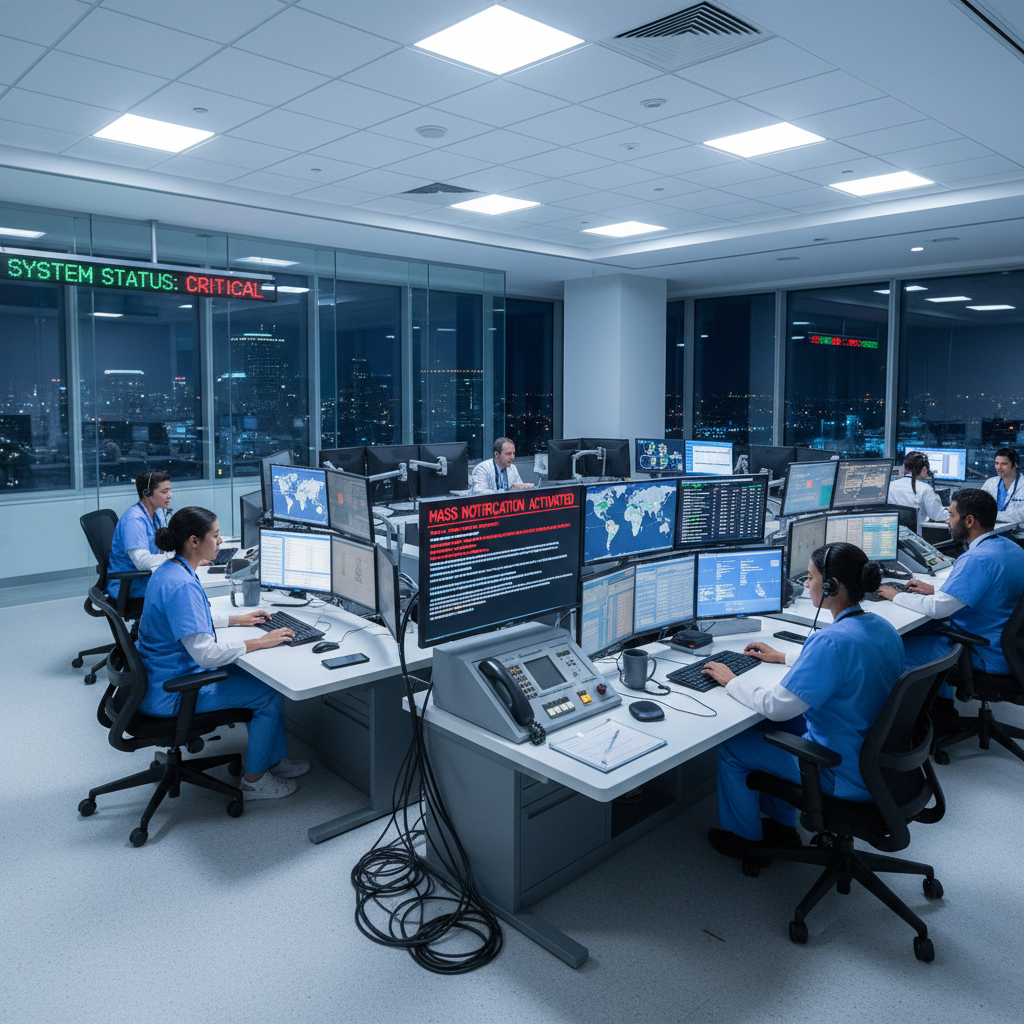
A facility-wide emergency — fire, active threat, severe weather, or mass casualty event — requires immediate, coordinated communication to every staff member, patient, and external agency simultaneously. Traditional phone trees and manual calling protocols are too slow, too error-prone, and too dependent on individuals who may themselves be affected by the emergency. Automated mass notification eliminates these vulnerabilities.
What Healthcare Mass Notification Covers
Healthcare mass notification is not a single system — it's a coordinated communication infrastructure that spans multiple channels, multiple audiences, and multiple emergency scenarios. A complete mass notification system covers staff alerts, patient notifications, family communications, external agency coordination, and post-incident documentation.
- Staff alerts — simultaneous SMS, email, voice, and app push notifications to all staff within seconds
- Patient notifications — evacuation instructions, shelter-in-place guidance, or appointment cancellations
- Family communications — automated updates to patient family contacts during extended emergencies
- External agency coordination — integration with 911 CAD, fire department, and law enforcement systems
- Vendor and contractor alerts — notification to on-site vendors and contractors during facility emergencies
- Post-incident documentation — automated incident log for regulatory reporting and after-action review
Integration with EHR and Facility Systems
The most powerful aspect of modern healthcare mass notification is its integration with existing facility systems. EHR integration provides real-time patient census data — knowing exactly how many patients are in the facility, their locations, and their mobility status is critical for evacuation planning. Access control integration can automatically lock or unlock doors based on the emergency type. PA system integration broadcasts audio alerts throughout the facility simultaneously with digital notifications.
Two-Way Communication: Knowing Who Has Responded
One-way mass notification tells you that messages were sent — but not whether staff received them, understood them, or are responding. Two-way notification systems require staff to acknowledge alerts and report their status, giving emergency coordinators real-time visibility into who is responding, who needs follow-up, and where gaps in the response exist.
Healthcare organizations that implement two-way mass notification systems report 94% staff acknowledgment rates within 5 minutes of an emergency alert — compared to 45% acknowledgment rates with one-way notification systems.
Emergency Preparedness Compliance
The Joint Commission, CMS, and state health departments all require healthcare organizations to maintain documented emergency communication plans and demonstrate their effectiveness through regular drills. NYC Healthcare Marketing's mass notification system includes built-in drill functionality, automated incident logging, and post-incident reports that satisfy regulatory documentation requirements.
Frequently Asked Questions
How quickly can a mass notification alert reach all staff?
Can mass notification be triggered automatically, or does it require manual activation?
How does the system handle staff who are off-duty during an emergency?
Ready to Implement These Strategies?
Our healthcare marketing specialists handle everything — from technical SEO to content creation to review management. No long-term contracts.
Get a Free Consultation