A no-show is not just a missed appointment — it's a provider sitting idle for 20–60 minutes, a patient who didn't receive care they needed, and revenue that cannot be recovered. For a practice with a 10% no-show rate seeing 50 patients per day, that's 5 missed appointments every day — roughly $750–$1,500 in lost revenue daily, or $150,000–$300,000 annually. Automated reminder systems address this problem at the source.
Why Single-Channel Reminders Fail
Many practices send a single reminder — typically an automated phone call the day before the appointment — and consider the reminder workflow complete. But patients have different communication preferences, and a single channel misses a significant portion of your patient population. Patients who prefer text messages don't listen to voicemails. Patients who prefer email miss phone calls. A multi-channel approach ensures every patient receives the reminder in the format they're most likely to act on.
The Optimal Reminder Sequence
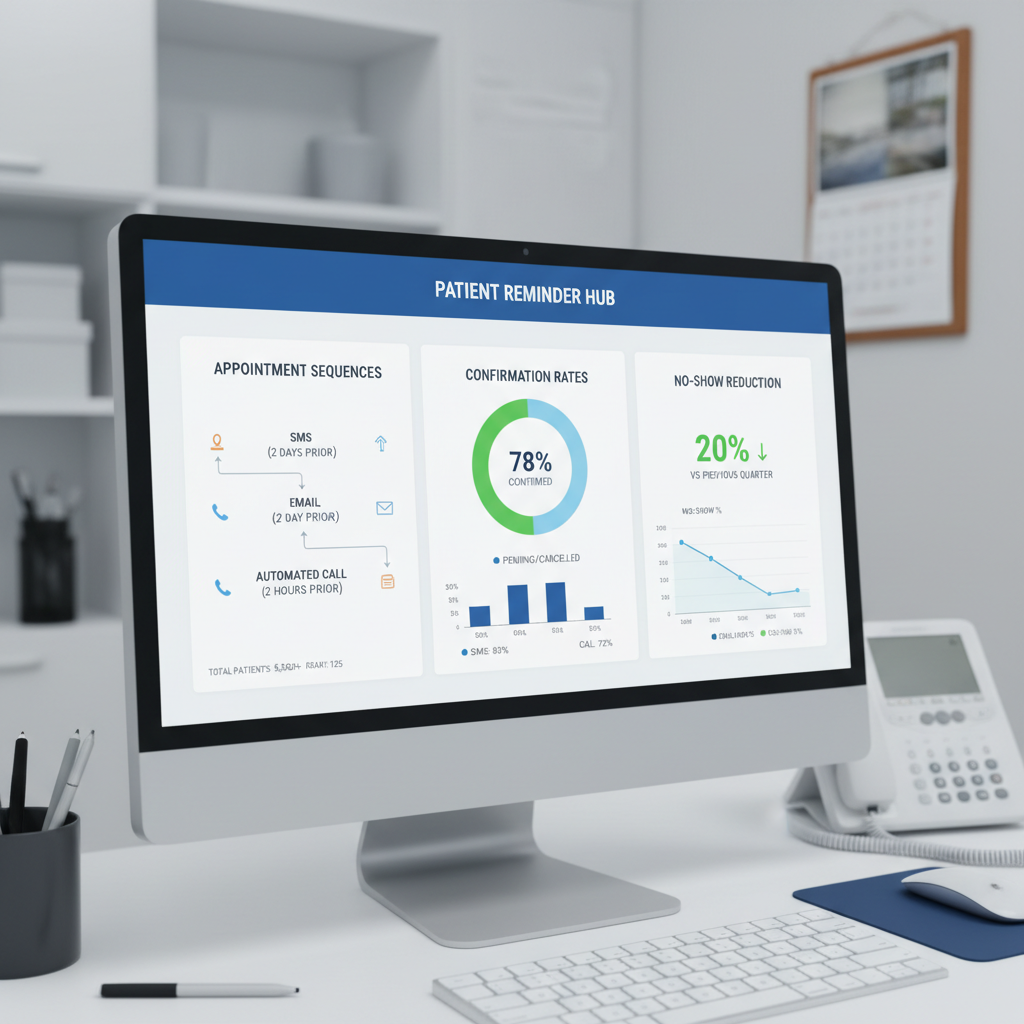
- 172 hours before: Confirmation request via SMS and email — patient confirms or cancels with a single tap, triggering waitlist filling if they cancel
- 224 hours before: Appointment reminder with full details — date, time, provider name, location, parking instructions, and what to bring
- 32 hours before: Same-day reminder via SMS — a brief, friendly reminder that the appointment is today with a one-tap option to confirm they're on their way
- 4Immediate cancellation response: When a patient cancels at any point, the system automatically contacts the next patient on the waitlist to offer the slot
Automated Waitlist Management: Filling Every Cancellation Gap
The most valuable feature of an automated reminder system is not the reminders themselves — it's what happens when a patient cancels. NYC Healthcare Marketing's reminder system maintains a real-time waitlist of patients who want earlier appointments. When a cancellation occurs, the system automatically contacts the first patient on the waitlist, offers the slot, and books the replacement appointment — all without any front desk involvement.
Practices using automated waitlist management fill 70–80% of same-day cancellation slots with waitlisted patients — recovering revenue that would otherwise be permanently lost to the cancellation.
Customizing Reminders for Different Patient Populations
Not all patients respond to the same reminder approach. NYC Healthcare Marketing's reminder system allows practices to customize reminder sequences by patient population — sending more frequent reminders to patients with a history of no-shows, adjusting the channel mix based on individual patient preferences, and personalizing reminder content for different appointment types (annual wellness vs. follow-up vs. procedure).
Frequently Asked Questions
How do automated reminders handle patients who don't have smartphones or prefer not to receive texts?
Can reminder sequences be customized for different appointment types?
How does the waitlist system work for patients who want to be notified of earlier appointments?
Ready to Implement These Strategies?
Our healthcare marketing specialists handle everything — from technical SEO to content creation to review management. No long-term contracts.
Get a Free Consultation